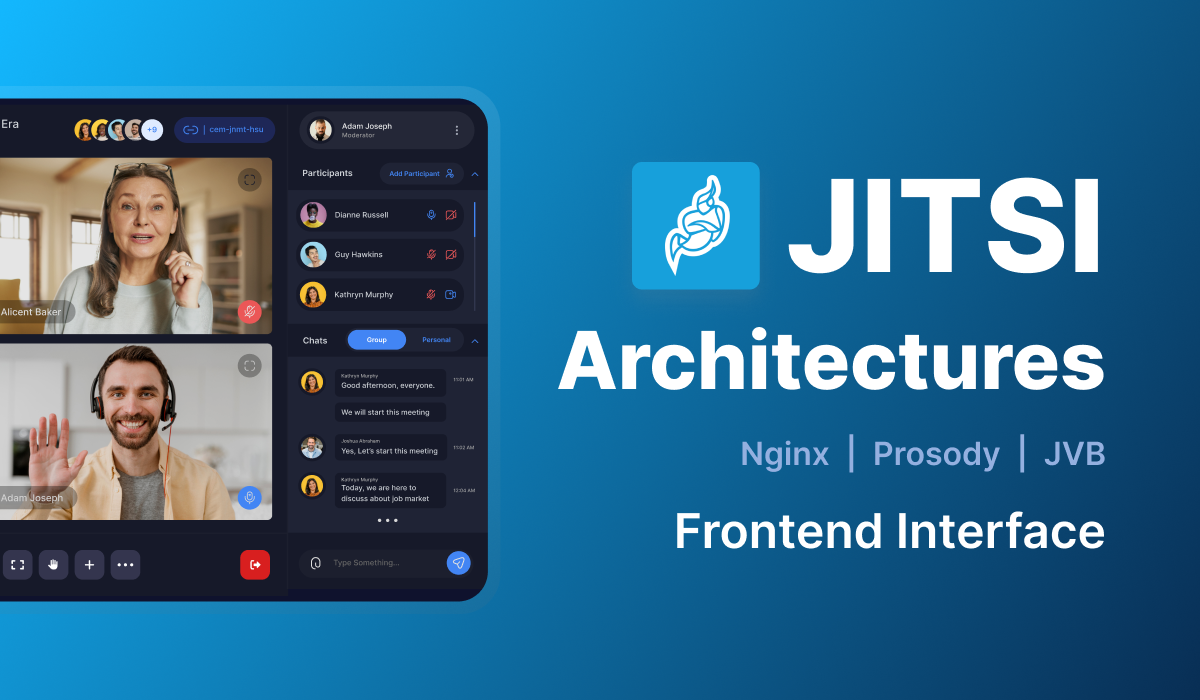
Jitsi is a leader in efficient video conferencing in the world of online communication. Behind its approachable exterior is a complex architecture that connects numerous components, each of which is essential to delivering a flawless conferencing experience. Exploring the architecture of Jitsi reveals a symphony of components working together to form a complete communication ecosystem.
The Core Components of Jitsi's Architecture
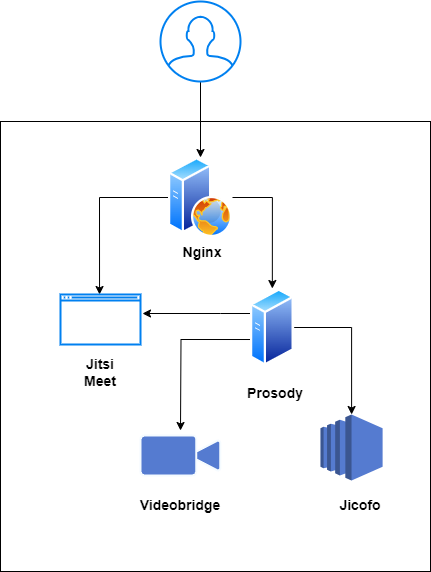
Jitsi's power comes from a collection of specialized services that handle everything from web traffic and user signaling to media routing. Let's break down the five key pillars of its architecture.
1. Nginx: The Gateway
Nginx acts as the front door to the Jitsi ecosystem, managing web traffic and securing connections.
- Role: Serves as a reverse proxy and web server.
- Function: Delivers the Jitsi Meet web interface to users and handles HTTPS termination, ensuring all interactions are encrypted.
- Analogy: Think of it as the building's main entrance and security desk, directing visitors and ensuring only authorized access.
2. Jicofo: The Conference Orchestrator
Jicofo (Jitsi Conference Focus) is the brain of the conference, managing sessions and participant signaling.
- Role: Manages the lifecycle of a conference.
- Function: Coordinates the signaling process for media negotiation, manages user roles (moderator, participant), and decides which participants' media streams are sent to others.
- Analogy: It's the event coordinator, managing who is on stage and ensuring the program runs smoothly.
3. Prosody: The Real-Time Messenger
Prosody is an XMPP server that handles all real-time signaling and messaging between participants.
- Role: XMPP (Extensible Messaging and Presence Protocol) server.
- Function: Manages user authentication, presence information, and instant messaging (chat). It creates and oversees the virtual chat rooms for conferences.
- Analogy: It's the instant messaging service of the conference, handling all text-based communication and status updates.
4. Jitsi Videobridge (JVB): The Media Backbone
The JVB is the workhorse that routes audio and video streams between all participants in a conference.
- Role: Selective Forwarding Unit (SFU).
- Function: Receives audio and video streams from each participant and intelligently forwards them to the other participants. This is far more efficient than a traditional MCU (Multipoint Control Unit).
- Analogy: It's the central traffic controller for all audio and video, ensuring every participant sees and hears everyone else clearly.
5. Frontend Interface: The User Experience
This is the user-facing web application that participants interact with, built with React.
- Role: The client-side application.
- Function: Provides the intuitive interface for users to join meetings, control their camera/microphone, share their screen, and use chat.
- Analogy: It's the virtual meeting room itself—the buttons, the video tiles, and the chat window that you see and use.
A Symphony of Collaboration
The Jitsi architecture is a masterful display of engineering, where Nginx, Jicofo, Prosody, the Jitsi Videobridge, and the Frontend Interface work in perfect harmony. Each component has a distinct and vital role, from securing the gateway to orchestrating the conference and routing media. This modular design is what makes Jitsi both powerful and flexible, creating a reliable and efficient video conferencing platform that can be tailored to any need.
Frequently Asked Questions
What is the role of the Jitsi Videobridge (JVB)?
The JVB is a Selective Forwarding Unit (SFU) that efficiently routes video and audio streams between participants. Instead of mixing streams, it forwards them selectively, which saves significant server resources and allows for larger conferences.
Why does Jitsi use both Nginx and Prosody?
Nginx and Prosody serve different purposes. Nginx acts as a reverse proxy and web server, handling HTTP/S traffic and serving the Jitsi web app. Prosody is an XMPP server that manages real-time signaling, chat, and user presence, which are essential for coordinating the conference.
Can I run Jitsi without one of these components?
No, all five components (Nginx, Jicofo, Prosody, JVB, and the Frontend) are essential for a standard Jitsi Meet deployment. Each one plays a critical role in establishing, managing, and running a video conference.