Introduction
In the ever-evolving digital world, the way we communicate has taken a quantum leap forward with the advent of WebRTC (Web Real-Time Communication). This transformative technology has redefined the boundaries of audio and video communication, enabling seamless interactions directly through web browsers without the need for any additional software or plugins. At the heart of this technology lies the media server, a crucial component that orchestrates the flow of media streams across the internet.
WebRTC is not just about making connections easier; it's a vital tool in today’s fast-paced digital landscape where real-time communication is expected. From video conferencing and live streaming to telemedicine and online education, WebRTC facilitates instantaneous connection, bridging geographical divides and fostering a more connected world.
Central to the functionality of WebRTC are open source media servers, which stand out for their adaptability and customizability. Unlike their proprietary counterparts, open source servers are developed in a collaborative environment, where a community of developers continually enhances and refines the technology. This openness not only accelerates innovation but also provides a high degree of flexibility, allowing developers to tailor solutions that meet specific needs without the constraints of licensing fees or closed ecosystems.
This article aims to explore the top open-source WebRTC media servers available today. By shedding light on their features, benefits, and how they support the complex demands of modern real-time communication, we will provide insights into how developers can leverage these tools to build advanced, efficient, and scalable streaming platforms. Whether you are a seasoned developer or just starting out, understanding the role and capabilities of these servers will be instrumental in navigating the world of WebRTC.
What Are Open Source Media Servers?
Open-source media servers are platforms where the source code is publicly available. This transparency allows developers to inspect, modify, and distribute the software as they see fit. In the context of WebRTC, these servers play a critical role in facilitating real-time communication by managing the transmission of audio and video streams over the internet.
Benefits of Using Open-Source Solutions for WebRTC Applications
- Customization: Developers can tailor the servers to their specific requirements, modifying the code to optimize performance or add unique features not found in commercial products.
- Cost-Effectiveness: Without the licensing fees that come with proprietary software, open-source servers can significantly reduce development costs.
- Community Support: A strong community means a wealth of shared knowledge, troubleshooting assistance, and regular updates driven by collective expertise and peer review.
- Transparency and Trust: With open access to the source code, developers can verify security features, understand exactly how the server operates, and trust the product they are using without hidden processes or unknown vulnerabilities.
Overview of Key Features and Functions
Open-source WebRTC media servers typically offer a rich feature set that is critical for real-time communication:
- Adaptive Streaming: Adjusts video quality to the user's bandwidth, ensuring a smooth experience regardless of internet speed.
- Multi-Protocol Support: These servers often support various communication protocols, enhancing compatibility across different platforms and devices.
- Recording and Playback: A must-have for applications like online learning and legal proceedings, this feature allows sessions to be recorded directly on the server for later retrieval and playback.
- Scalability: Open-source servers can handle everything from small-scale communications to large broadcasts, making them suitable for a range of uses from private video calls to massive public webinars.
By leveraging the inherent advantages of open-source WebRTC media servers, developers can not only build cost-effective and highly customized solutions but also contribute to the evolution of the technology itself, ensuring it remains at the forefront of real-time digital communication. This synergy of collaboration and technology makes open-source WebRTC media servers a cornerstone of modern communication infrastructures.
Which is the Best Open Source WebRTC Server?
The landscape of open-source WebRTC media servers is vast, but certain projects stand out for their reliability, extensive feature sets, and robust community support. Among these, Jitsi Meet has emerged as a premier choice for developers and businesses, thanks to its comprehensive approach to real-time communication.
1. Jitsi Meet: The #1 Open Source WebRTC Media Server
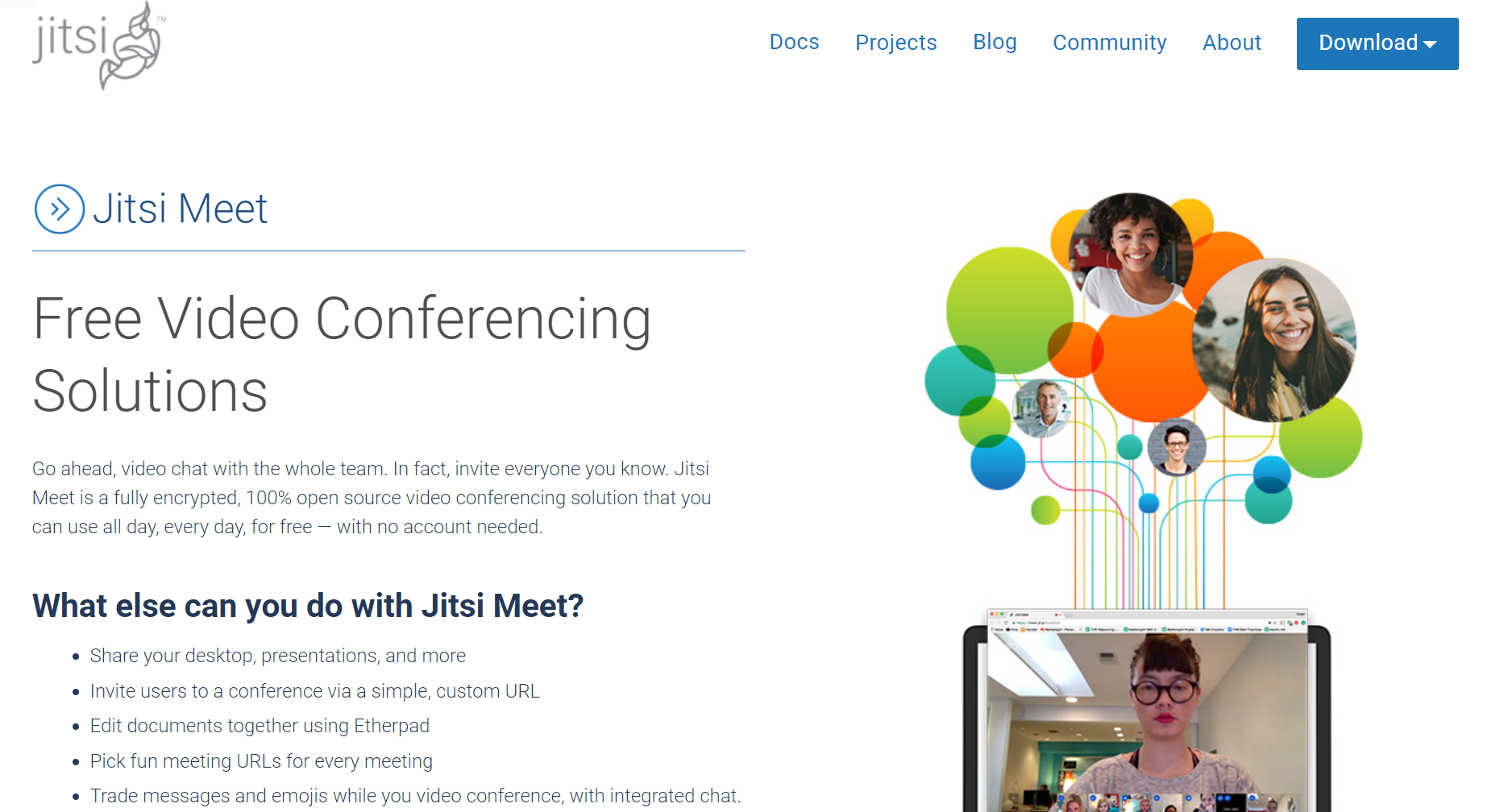
Jitsi Meet, powered by the Jitsi Videobridge, stands out as a top-tier open-source WebRTC media server, renowned for its scalability, high-quality audio/video, and robust security. Unlike traditional solutions that merge all streams, Jitsi employs a Selective Forwarding Unit (SFU) approach, routing each participant's stream directly to others, minimizing latency and maximizing performance. This architecture supports thousands of participants across various sessions without performance degradation. Jitsi's modularity allows for extensive customization, making it a versatile choice for developers.
Key Features and Advantages of Jitsi
- Scalability: Jitsi can be easily scaled to accommodate growth, handling thousands of concurrent participants across various sessions without a significant drop in performance.
- High-Quality Audio/Video: It supports HD audio and video and works smoothly across all platforms. Jitsi's adaptive video quality dynamically adjusts to each participant's bandwidth.
- Encryption: Jitsi ensures that communication is secure through end-to-end encryption on all calls, protecting against eavesdropping and data breaches.
- Modularity: Jitsi's architecture is highly modular, allowing developers to customize or add new functionalities as they need them.
Advanced Features of Jitsi Meet
As the leading open-source WebRTC media server, Jitsi Meet offers a range of advanced features that enhance its capabilities:
- Voice Calls: High-quality voice communication.
- Live Chat: Real-time text chat alongside video chat.
- Screen Sharing: Share screens for presentations and collaboration.
- Conference Management: Manage participants, control settings, mute/unmute.
- Hand Raising: Allows participants to request to speak.
- Mobile App: Full-featured Android and iOS apps.
- Active Speaker's Auto View: Highlights the current speaker.
- Notification Blocker: Blocks notifications during meetings.
- Polls: Conduct live polls.
- Remote Control: Remotely control another's desktop.
- Web and Native SDKs: Integrate Jitsi into other applications.
- Simulcast: Supports multiple video streams of different qualities.
- Recording and Live Streaming: Record and broadcast meetings.
- Transcriptions: Real-time transcription integration.
- Breakout Rooms: Small group discussions.
- Virtual Backgrounds: Custom backgrounds for privacy.
- Lobby Mode: Control who enters the meeting.
- Custom Branding: Customize the interface branding.
- Etherpad Integration: Collaborative note-taking.
- Shared Document Editing: Edit documents within the meeting interface.
2. Kurento: Pushing the Boundaries with Advanced Media Processing
Kurento is a well-regarded name in the realm of open-source WebRTC media servers, appreciated for its rich feature set that caters to developers looking to implement complex multimedia features. As a project that combines the functionalities of both an SFU (Selective Forwarding Unit) and an MCU (Multipoint Control Unit), Kurento provides a versatile backbone for real-time communication applications.
Key Features and Functions of Kurento
- Scalability: Kurento is designed to scale efficiently, capable of handling a large number of media streams, which facilitates large-scale deployments. This scalability is crucial for organizations that need robust, high-performance communication solutions across various locations.
- Advanced Audio/Video Processing: At its core, Kurento excels in media processing. This includes capabilities for on-the-fly media transformation, such as video filtering, face recognition, augmented reality, and much more. Such features allow developers to create interactive and immersive user experiences.
- Recording and Streaming: Kurento supports the recording and streaming of both audio and video content. This functionality is a must-have for applications that need to broadcast live events or store media for later on-demand access, making it a versatile choice for media handling.
- Robust Security Features: Security is a top priority in any WebRTC solution, and Kurento provides several mechanisms to ensure secure communication channels. This includes support for standard encryption protocols to protect media data during transmission.
3. Mediasoup: Empowering the Modern Web with Node.js
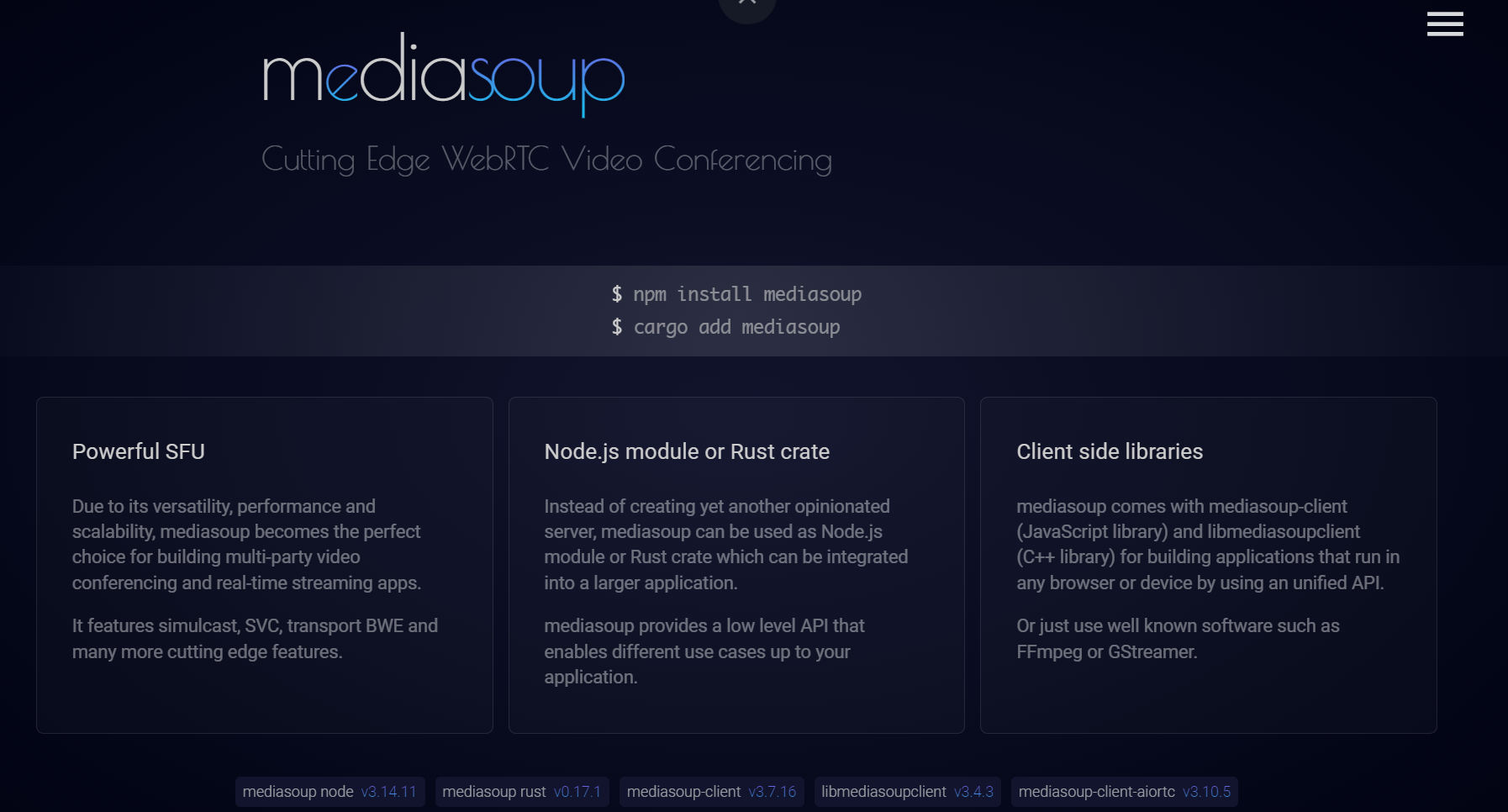
In the dynamic world of WebRTC, Mediasoup stands out as a robust, efficient, and highly adaptable media server framework, particularly noted for its integration with Node.js. This 'webrtc media server nodejs' framework is designed for developers who prioritize streamlined, high-performance applications without the overhead of unnecessary features.
Key Features and Functions of Mediasoup
- Scalability: One of Mediasoup's standout features is its ability to scale. Designed to handle large-scale media transmission efficiently, Mediasoup supports a high number of concurrent media streams, making it ideal for enterprise-level applications that require managing extensive user loads.
- Advanced Audio/Video Processing: Mediasoup provides extensive support for real-time audio and video processing. This includes adaptive bitrate streaming capabilities, which optimize the streaming experience based on the user's network conditions, ensuring high-quality communication across varying internet speeds.
- Robust Encryption: Treating security as a paramount concern, Mediasoup ensures that all communications are protected with rigorous encryption standards. This security protocol is vital for applications that require confidential communication, such as in telehealth and financial services.
- High Customization and Plugin Support: Reflecting its open-source nature, Mediasoup offers extensive customization options. Developers can tailor the media server using a variety of plugins and mods, enhancing functionality or integrating with other systems as needed for specific use cases.
4. Ant Media Server: Ultra-Low Latency for Interactive Broadcasting
Ant Media Server distinguishes itself in the WebRTC landscape with its exceptional capability for ultra-low latency streaming. Designed to meet the demands of applications that require near-instantaneous interaction, such as live auctions, gaming, and sports broadcasting, Ant Media Server ensures that the delay is kept to a minimum, providing a seamless streaming experience for viewers.
Key Features and Capabilities of Ant Media Server
- Ultra-Low Latency Streaming: Ant Media Server is engineered to deliver content with minimal delay, significantly reducing the gap between content capture and display. This feature is critical for interactive applications where even a small delay can negatively impact the user experience.
- Adaptive Bitrate Streaming: The server dynamically adjusts the video quality based on the viewer's internet speed, which prevents buffering and ensures a smooth viewing experience under varying network conditions. This adaptability is ideal for users with fluctuating internet connections.
- Recording and Restreaming: Not only does Ant Media Server allow for live streaming, but it also offers options to record broadcasts for on-demand playback. Furthermore, it supports restreaming to multiple platforms like YouTube Live and Facebook Live simultaneously, expanding the reach of broadcasts without additional workload.
- Scalability: With its scalable architecture, Ant Media Server can manage streams for a large number of viewers without compromising performance. This makes it suitable for large-scale deployments.
5. Open WebRTC Toolkit (OWT): A Robust Toolkit for Developers
The Open WebRTC Toolkit (OWT), developed as part of Intel's 'open source webrtc' initiative, is designed to provide developers with a comprehensive set of tools necessary to build and deploy WebRTC applications efficiently. This toolkit is engineered to enhance the capabilities of developers looking to harness the full potential of real-time communication technologies.
Features and Capabilities of Open WebRTC Toolkit
- Scalability: OWT is built to be scalable, capable of supporting a large number of concurrent streams without compromising service quality. This makes it an ideal solution for organizations that need to manage large-scale communication deployments.
- Advanced Audio/Video Processing: The toolkit provides advanced audio and video processing capabilities, including support for various codecs, on-the-fly media transcoding, and real-time adjustments to media streams to enhance the overall user experience.
- Recording and Streaming: OWT allows for the recording of audio and video sessions directly on the server, which can be useful for archiving meetings, webinars, and other events. It also supports streaming to various platforms, extending the reach of broadcasts and facilitating wider content dissemination.
- Customization Options: With its modular architecture, OWT allows developers to add custom plugins and modify existing functionalities. This level of customization enables developers to create unique solutions tailored to their specific needs.
6. Janus WebRTC Gateway
The Janus WebRTC Gateway stands as a foundational component in the landscape of open-source real-time communication solutions. Known for its versatility and robustness, Janus serves not just as a gateway but as a critical framework that facilitates the seamless integration and management of audio and video communications across a diverse range of endpoints.
Key Features and Capabilities of Janus WebRTC Gateway
- Scalability: Janus boasts a highly scalable architecture, capable of handling hundreds of thousands of concurrent sessions on a single server. This scalability ensures that Janus can support large-scale communication deployments, such as city-wide surveillance systems, without a degradation in performance.
- Low Latency: A must-have for applications that require real-time interaction, Janus offers ultra-low latency streaming capabilities. This feature is particularly critical in environments like online gaming, live auctions, or any application where even minor delays can significantly impact the user experience.
- Advanced Audio/Video Processing: Janus provides extensive support for a variety of audio and video processing tasks. This includes adaptive bitrate streaming, automatic error recovery, and support for multiple codecs, ensuring optimal media delivery regardless of network conditions.
- Plugin Support: One of Janus's standout features is its extensive plugin architecture. This system allows developers to extend Janus's capabilities or add new functionalities tailored to specific needs. Plugins can range from simple recorders and echo testers to more complex systems like SIP gateways or broadcast relays.
7. Medooze WebRTC Media Server
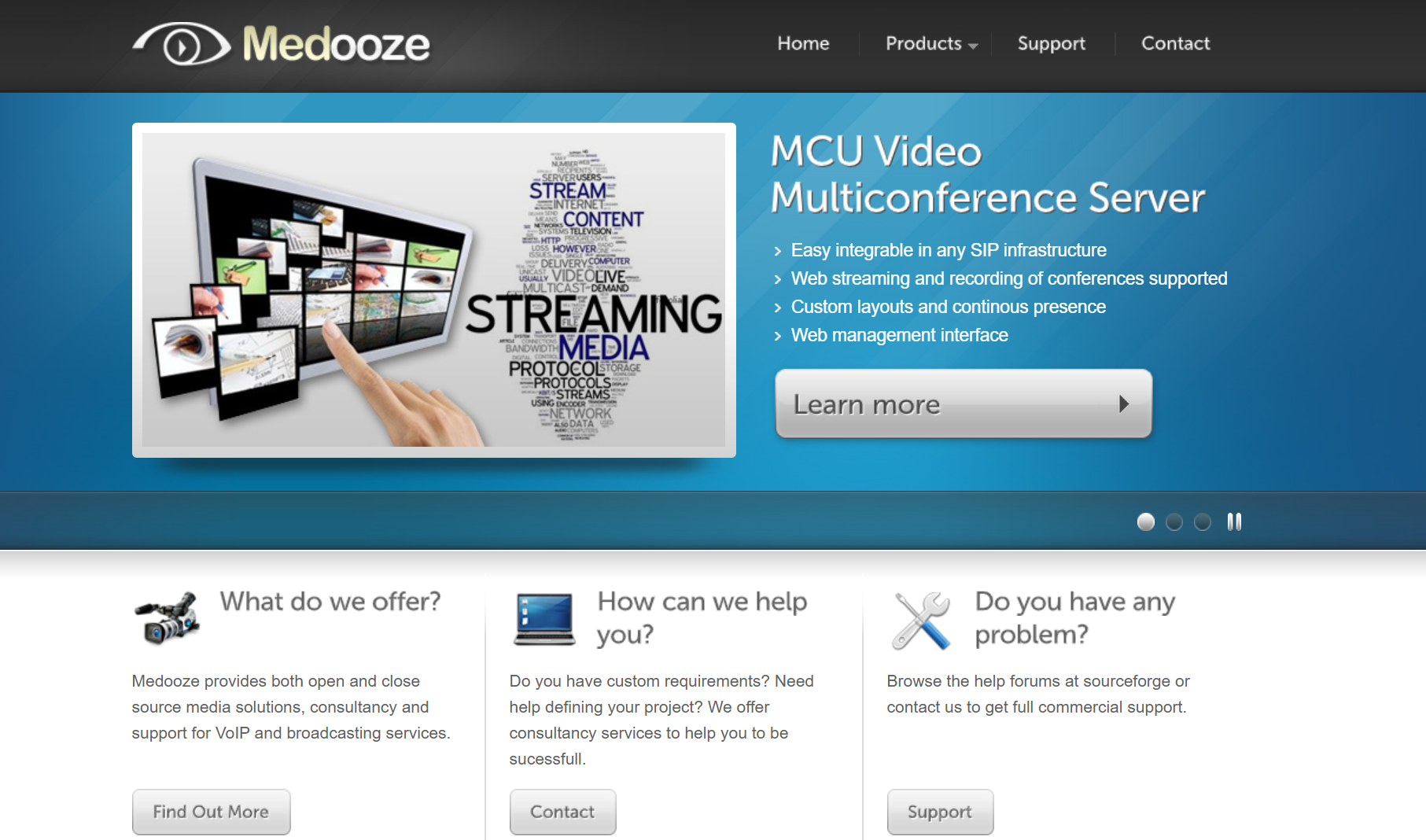
Medooze is a high-performance, open-source WebRTC media server known for its scalability, ultra-low latency, and extensive customization options. It is ideal for developers and businesses looking to implement secure, real-time communication solutions, including video conferencing, live streaming, and interactive platforms. Medooze supports a wide range of codecs and protocols, ensuring compatibility across various devices and applications. With its seamless Node.js integration and robust APIs, Medooze is a top choice for those looking to build scalable and secure WebRTC solutions.
Key Features
- Scalability: Handles large-scale deployments with ease.
- Ultra-Low Latency: A must-have for real-time communication.
- Customization: Extensive APIs for tailored solutions.
Best Use Cases
- Enterprise Video Conferencing: Perfect for secure, scalable meetings.
- Live Streaming: Ideal for broadcasting with minimal delay.
- Interactive Platforms: Supports high-performance real-time communication.
Medooze's open-source foundation and community-driven approach make it an excellent tool for developers. The platform supports a wide range of codecs and protocols, ensuring compatibility across various devices and applications. Its ability to integrate seamlessly with Node.js enhances its appeal, making it a go-to option for those looking to build robust WebRTC solutions.
Open Source Contributions
Medooze is actively involved in the open-source community, with repositories available on GitHub. Key projects include:
- media-server-node: WebRTC Media Server for Node.js
- media-server: The generic WebRTC Media Server
- semantic-sdp-js: Tools for SDP info and parsing
These projects demonstrate Medooze's commitment to innovation and continuous improvement in the WebRTC space, providing developers with the tools they need to build advanced communication solutions.
WebRTC Media Server Comparison Table
| Feature/Server | Jitsi Meet | Kurento | Mediasoup | Ant Media Server | Janus WebRTC Gateway |
|---|---|---|---|---|---|
| Scalability | High, supports large-scale deployments | Medium, more suited for controlled environment sizes | High, designed for large-scale professional use | High, excels in large-scale broadcast environments | High, capable of handling thousands of connections |
| Performance | High performance with HD video support | Good performance with real-time processing capability | Exceptional performance with low resource consumption | Ultra-low latency streaming | High performance with low-latency streaming |
| Features | Comprehensive features for conferencing and encryption | Advanced media processing, supports MCU and SFU modes | Minimalist design, high customization | Adaptive bitrate, recording, streaming, restreaming | Extensive plugin architecture, multi-protocol support |
| Ease of Customization | High, open to modifications and integrations | Medium, requires deeper technical expertise | High, with a flexible Node.js API | Medium, some customization available through plugins | High, highly modular and extensible with plugins |
| Best Use Cases | Large-scale video conferencing, educational platforms | Applications requiring complex media processing | High-performance streaming applications | Real-time interactive broadcasting, streaming | Multi-purpose streaming integrating various protocols |
Frequently Asked Questions
What are open-source WebRTC media servers?
Open-source WebRTC media servers are platforms where the source code is publicly available. These servers play a critical role in facilitating real-time communication by managing the transmission of audio and video streams over the internet.
What are the benefits of using open-source solutions for WebRTC applications?
Open-source WebRTC solutions provide customization, cost-effectiveness, community support, transparency, and trust. With open access to the source code, developers can verify security features and develop solutions tailored to specific needs.
Which is the best open-source WebRTC media server?
Jitsi Meet is considered the leading open-source WebRTC media server due to its scalability, high-quality audio/video, robust security, and comprehensive features. However, the choice depends on the specific requirements of the project.